About Yerba MateYerba Mate History & Culture
When Jesuit missionaries arrived in the region in the 16th century, they organized the Guarani people into a system of missions along the Rio Alto Parana. These missions grew so wealthy as a result of their yerba mate plantations that the regional secular governments ejected the Jesuits and took over production. This was an era of much hardship and turmoil for the Guarani people. Over the course of the following centuries, yerba mate developed into an icon of national identity for many South American countries, especially Argentina, Uruguay, and Paraguay. To this day, Argentines travelling abroad can be easily recognized by their mate gear, which they take out at every opportunity. If you see a group of young people sitting on a beach in Miami or in a cafe in Paris sharing mate, chances are you'll overhear them speaking Spanish in their distinctive Argentine accent, which sounds just a bit like Italian. At the heart of yerba mate culture is the ritual of sharing. If an Argentine asks you to share a mate, this is a great compliment. She is inviting you into a circle of friendship and hospitality. Like the Japanese tea ceremony, a subtle language has evolved around the rate of pouring the water, and also the size of the pours. Generally speaking, smaller and slower pours indicate a greater level of interpersonal connection because this makes the yerba last longer! Yerba Mate is finally shaking off its sleepy regional roots and going global. It's showing up as a "power ingredient" in energy drinks and other products in our fast-paced culture. However, if we North Americans want to become the #1 importer of yerba mate, we still have a long way to go. Yerba Mate has been popular in the Middle East for quite a while. Something about the communal nature of the yerba mate ritual must appeal to Arabic traditions of hospitality, friendship, and family. Believe it or not, the #1 importer of yerba mate is currently Syria. Yerba Mate Botany & Ecology
Yerba Mate produces clusters of white flowers that mature into bright red berries. For years, botanists tried and failed to get the berries to sprout in other lands. One of the reasons that yerba mate never grew popular in Europe during the colonial era was that yerba mate was difficult to cultivate beyond its native range. Eventually, local Guarani people showed the botanists how the berries sprouted once they were eaten by toucans. It turned out that the toucans had acids in their digestive tracts that broke down the seeds' hard outer coatings, making them ready to sprout. Yerba Mate is a major component of the endangered Matto Grosso, or Interior Atlantic Forest type. The Matto Grosso is home to the toucan, the jaguar, and the coati, among a thousand lesser-known but no less wonderful endemic creatures. Sustainable yerba mate cultivation represents the last best chance to preserve this unique biological treasure trove. Health Benefits of Yerba MateStimulationYerba mate provides 25 mg of caffeine per 2g tea bag in 8 oz of water. For comparison, the average cup of coffee has 135 mg of caffeine. The average cup of black tea contains 50 mg. Green tea has 30 mg. Not all 'caffeines' are the same, however. What we refer to as 'caffeine' is really a group of substances known to chemists as Xanthine Alkaloids. The caffeine in coffee is very physical and quick to take effect. Theophylline is the 'caffeine' found in green tea. It tends to be very mental. Theobromine is the 'caffeine' found in chocolate. It tends to be very slow-releasing. Yerba mate actually contains a mixture of these three xanthine alkaloids. It also provides minerals to support nervous system function, and B-vitamins to relax muscles. For these reasons, it produces a balanced, long-lasting physical and mental stimulation. At one point, South American chemists were so intrigued by the qualitative difference between yerba mate stimulation and coffee stimulation that they invented a phantom molecule called mateine to explain it. They claimed that mateine was a unique molecule in the xanthine alkaloid family. We now know this is not the case, though we still sometimes refer to mateine as the holistic effect of drinking yerba mate. Weight LossYerba mate receives a lot of press as a diet and weight-loss tea. While nothing can replace a healthy diet, regular exercise, and a great attitude, yerba mate can certainly give you a boost:
NutritionYerba Mate is often touted as "the nutritious stimulant." Below is a chart that shows the nutritional value of a mug of yerba mate tea.
Yerba Mate AntioxidantsWhen brewed as directed, this tea provides an ORAC value of 10,000 µmolTE/240ml, which is five times stronger than a typical cup of green tea. Yerba Mate & PAHA lot of yerba mate is dried with smoke. In general, smoked foods often contain high levels of carcinogenic substances known as PAH's (polycyclic aromatic hydrocarbons). To be on the safe side, you may want to drink unsmoked yerba mate. Yerba Mate pHA cup of mate cocido brewed at medium strength yields a pH of around 5.5. Be aware that variations in brewing method and water quality will inevitably cause variation. For best results, use filtered pH-neutral water and don't steep longer than five minutes. Yerba Mate & FluorideIf you are concerned about the high fluoride content in green tea, yerba mate might be a good alternative. Yerba mate has a lot less fluoride than green tea. An 8 oz cup of EcoTeas yerba mate with one 2 g tea bag yields 0.021 mg of fluoride, which is only one-fifth the fluoride content of the average cup of green tea brewed at similar strength. The Preparation of Yerba MateYerba Mate Traditional-Style
To Be a Good Cebador:
Yerba Mate Cocido'Mate Cocido' is the Spanish term for yerba mate brewed like any other tea or coffee. You can use tea bags, a tea ball, a strainer, a French press, or a coffee maker. Use the same proportions you would for coffee or other tea. Here are some helpful tips to make a great cup of mate:
Yerba Mate Gringo-StyleThis is our playful term for a style of drinking yerba mate that is getting popular in North America. You could say it's a cross between Mate Cocido and Traditional Style.
Yerba Mate 'Terere'Enjoy iced yerba mate with a bombilla! Terere is a refreshing summer treat. It is more popular than hot mate in tropical South America.
Yerba Mate EspressoBrew yerba mate with an espresso machine. It's easy and tasty!
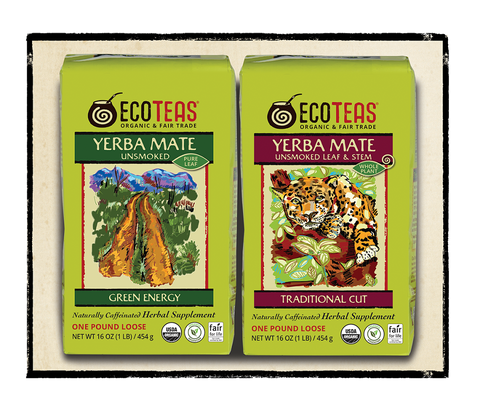
Yerba Mate Blending OptionsAccording to traditional Guarani herb-lore, yerba mate acts as a catalyst to enhance the properties of other herbs. Many blends are available on the market. You can also acquire your own herbs and experiment. The bombilla is a great tool for trying out your own unique concoctions. You can even grow your own herbs and/or learn to wildcraft. No matter where you live, there's probably a variety of tasty and healing herbs within a short stroll from your home. Wildcrafting is a great opportunity to get to know your local flora. When we wander the hills above our home in southern Oregon, we blend our yerba with manzanita berries, Douglas fir needles, sagebrush, myrtlewood, or wild mint. Consult an expert if you are unsure of a plant's identity or use. You can frequently go on organized wildcrafting hikes through your local outdoor store or college outdoor club. In addition to wildcrafting, here's a few of the more common herbs and flavors you can get at any natural food store or grow in your backyard. Toss them into your French press, or sprinkle them atop the loose yerba in your mate gourd: Our Yerba Mate SourceEcoTeas Organic Yerba Mate comes from a family farm in the state of Misiones in northeastern Argentina. This region is famous for producing the highest quality yerba mate. Here the sun, rain, and soil are perfectly suited to this vibrant plant. Our organic family farm produces outstanding yerba mate. While most yerba mate is dried with the use of smoke, our farmers' smoke-free drying process creates a clean, smooth yerba mate. After drying, our yerba mate is aged for a minimum of nine months to allow the flavor and naturally-ocurring acids in the leaves to mellow. Finally, we sift our yerba mate during milling to remove stems and powder, creating a pure leaf yerba mate of exceptional quality and potency. Our family farmers are committed to ecological farming. Their traditional methods leave dense corridors of native forest intact. Many of these wildlife-rich lands have never seen a machete, and they never will. We have partnered with our farmers to begin an ambitious project in sustainable agriculture. First, we are helping the local subsistence farmers who live nearby to get certified as organic. Not only will this protect our farm's watershed, it will preserve these farmers' traditions and help them achieve environmentally-sound livelihoods. Next, we're replanting pasturelands with native species to create habitats where wildlife and yerba mate can coexist. Together with you, our North American customers, we are creating long-term solutions that honor the people, plants, and wildlife that call the rainforest home. |
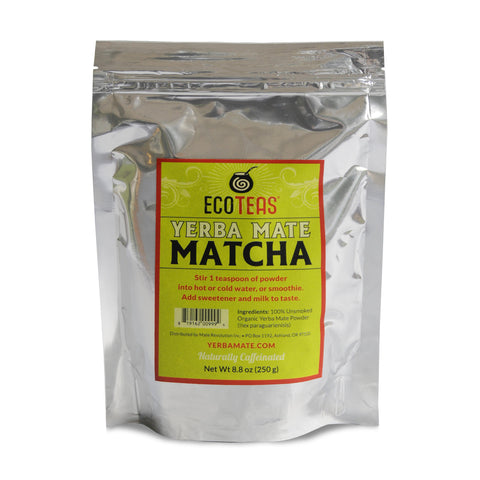
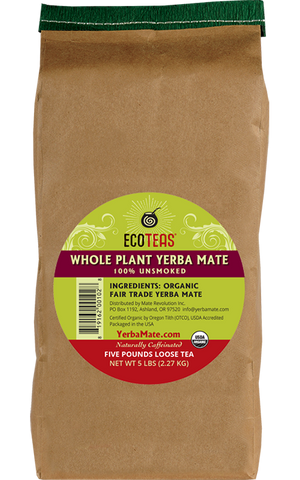
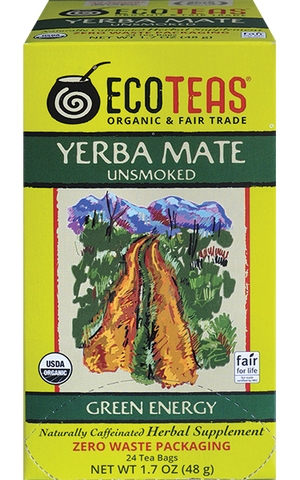
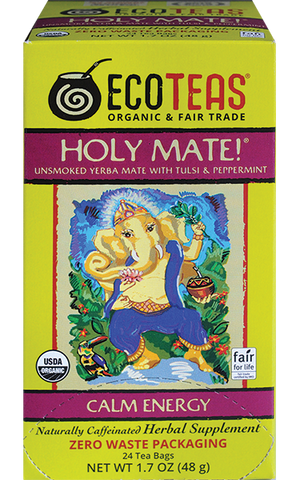
Our Yerba Mate Products
|
||||||||||||||||||||||||||||||||||||||||||||||||||||||||||||||||